

How do you play a song on the piano? In this lesson we will see how to use the piano to accompany a singer, but also how to adapt a melody so that it can be played only with the piano, in an instrumental version.Continue readingHow to play songs on the piano. Adapting a song for the piano
Tag: music theory

[Monday Notes no. 161] Kiss of Life is a song by British singer Sade Adu that has a typical 90s sound. This piece is very peculiar because it apparently does not even contain a cadence. Let’s try to analyze it to find out if there really can exist a pop song without cadences.Continue readingSade, Kiss of Life. A song without cadences?

[Monday Notes no. 158] Deborah’s Theme is the main piece written by Ennio Morricone for the soundtrack of Once Upon a Time in America, one of Sergio Leone’s most important films. I have tried to analyse this masterpiece in film music.Continue readingDeborah’s Theme by Ennio Morricone. Analysis of a masterpiece

[Monday Note 157] The soundtrack of the film Schindler’s List has been created by one of the greatest masters of film music, John Williams. The American composer has written music for all kinds of films, from the science fiction of Star Wars and E.T. to the adventures of Indiana Jones. In this case, his music…Continue readingSchindler’s List by John Williams, all the secrets of a great soundtrack

[Monday’s Note No. 49] Take Five is one of the few pieces in the jazz repertoire to have the unusual time of 5/4, hence the double meaning of the title, which in English means “taking five minutes off” but also hints at the rhythmic tempo of the piece.Continue readingDave Brubeck and Paul Desmond, Take Five. An unexpected success

As with almost all activities, improving at the piano requires commitment and patience. However, it is also very important to work in the right direction and improve in several areas. A mechanical and distracted study brings few results, and we run the risk of becoming discouraged and giving up. In this lesson, I have tried…Continue readingLearning to play the piano: how to study technique, music reading, hand independence and music theory
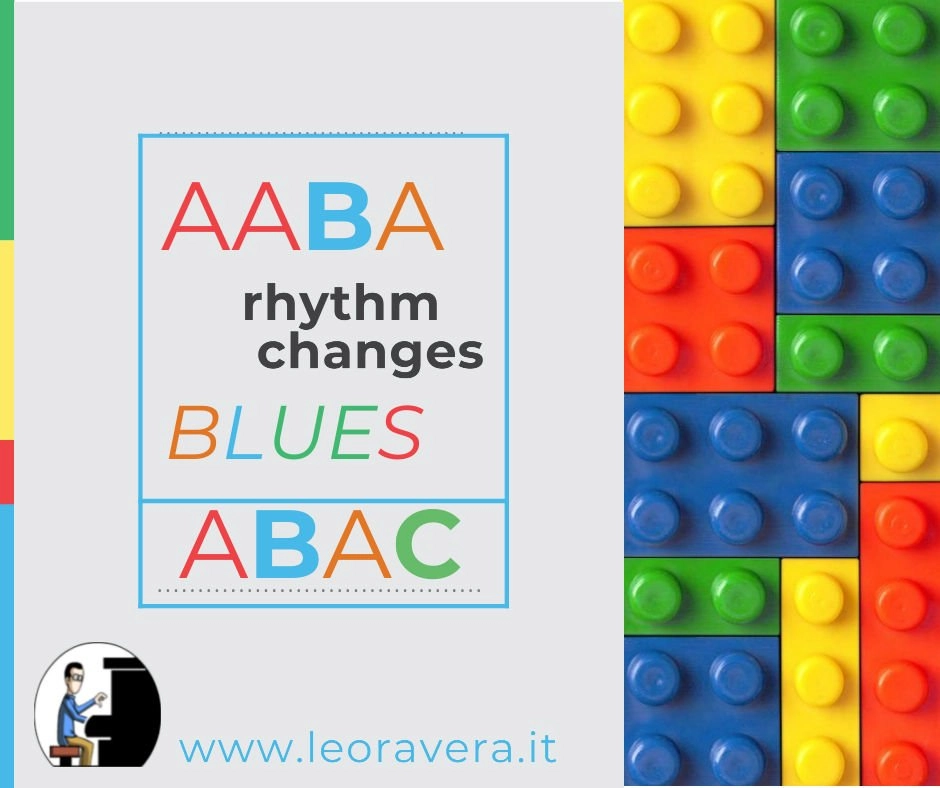
Songs in general, and jazz standards in particular, tend to repeat patterns and repetitive harmonic successions. It is important to understand well how these chord successions are organised and the structure of the songs as a whole. You will then be able to play more relaxed, and consequently more creatively. In this lesson we will…Continue readingForm in pop songs and jazz standards
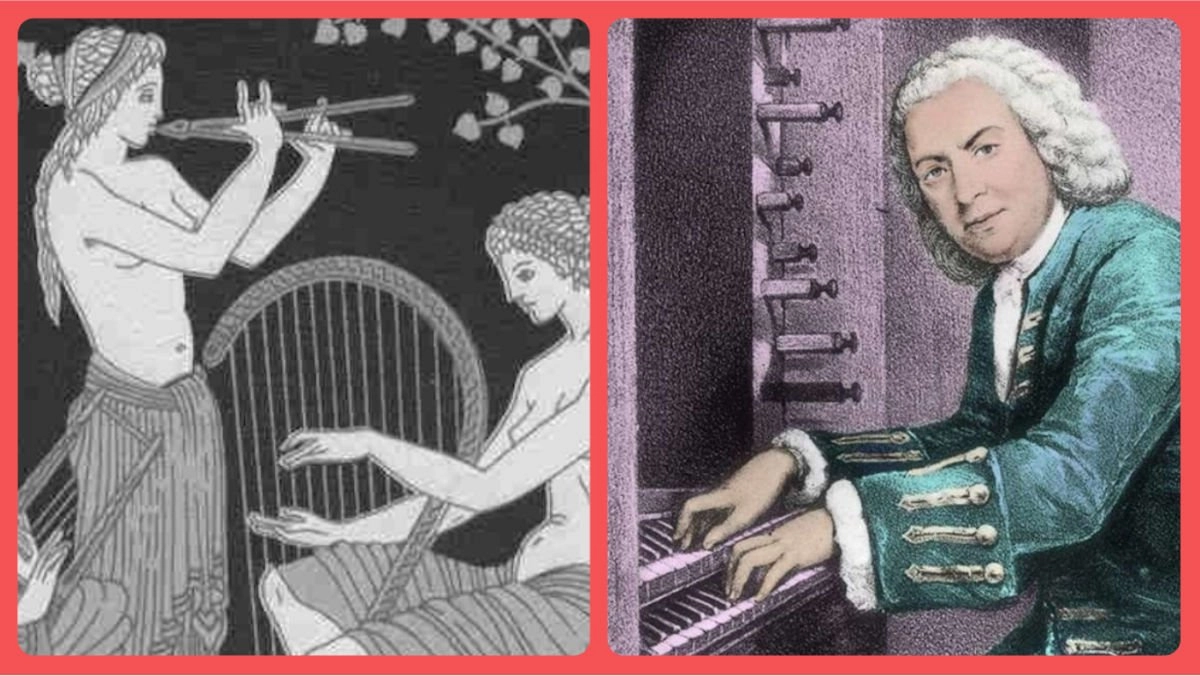
What is the difference between modal and tonal music? Often when analysing jazz standards we distinguish between modal and tonal pieces, and the same happens when we talk about improvisation: there is modal improvisation and tonal improvisation. So let’s try to explain the difference between modal and tonal music by giving some concrete examples.Continue readingTonal and modal music: what is the difference?
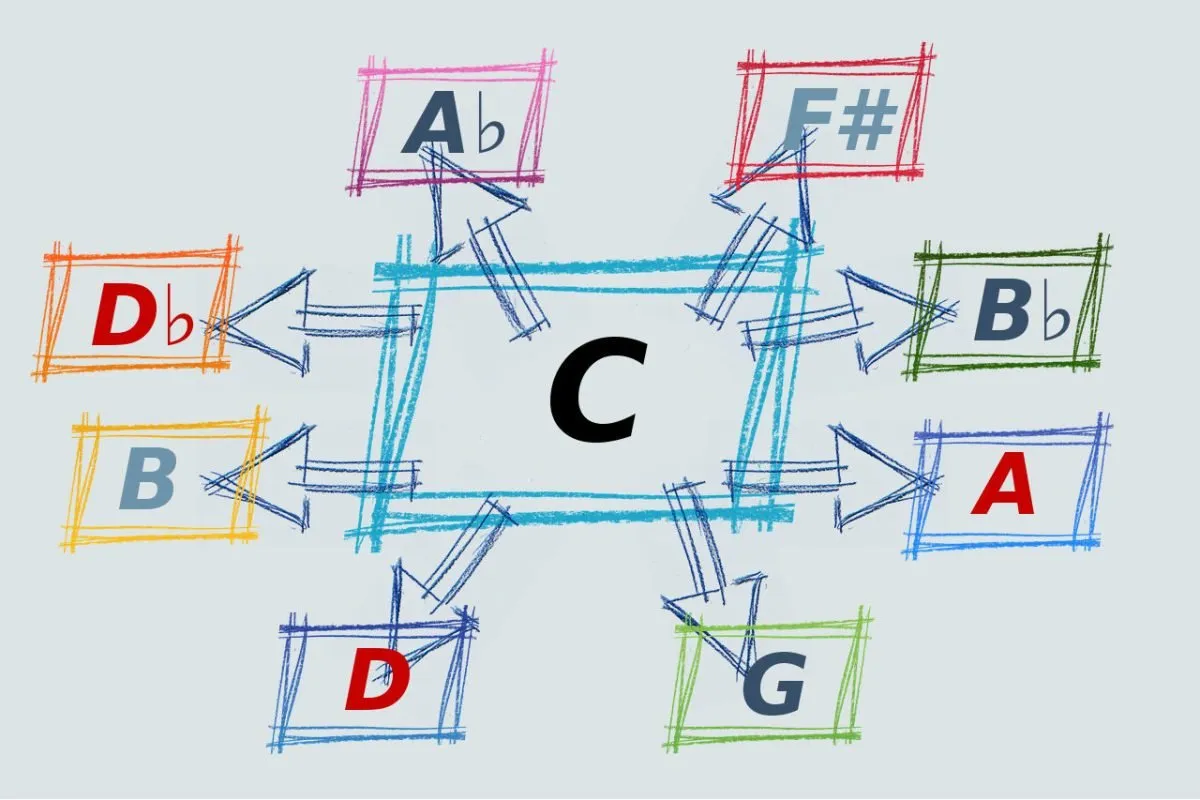
Modulation is a movement of chords by which a piece of music changes from one key to another. Modulation is most often used in the classical and jazz repertoire, while it is used less in rock and pop, where songs usually remain in the initial key throughout their entire duration.Continue readingModulation in music: what it is, what it is used for

What is a cadence in music? In this lesson, you’ll find out what the three most important cadences are and where they are used: the perfect cadence, the plagal cadence and the minor cadence. We will also talk about a special type of cadence called a turn around.Continue readingPerfect cadence, plagal cadence and minor cadence